



From Climate Risk to Coastal Resilience: Turning science into action to protect Mediterranean coasts
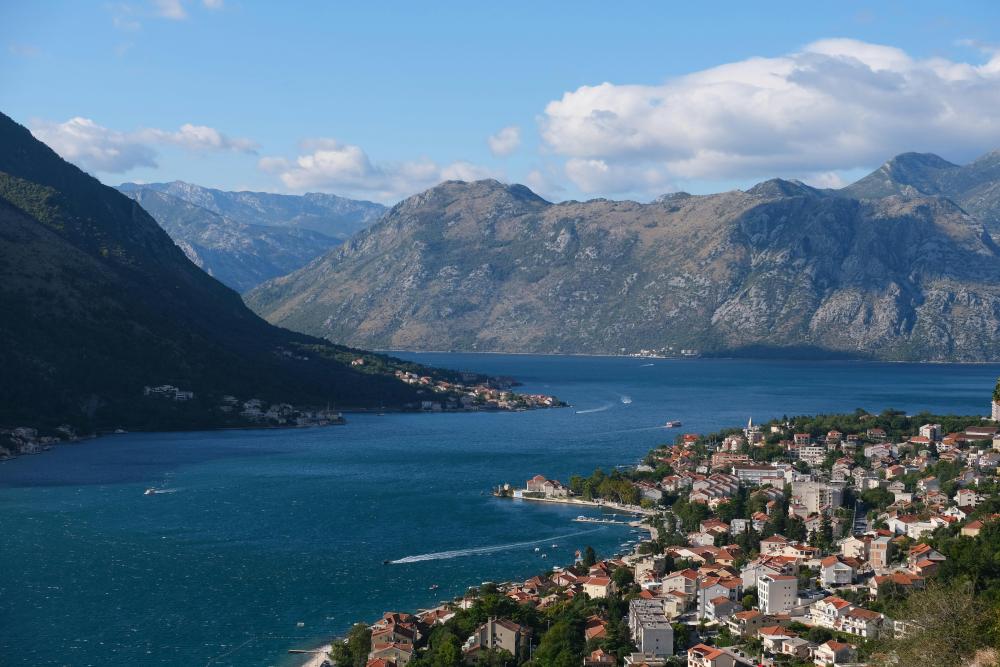
Along Montenegro’s Adriatic coast, the dramatic landscapes of Boka Kotorska Bay have long defined the identity of the region. Surrounded by steep mountains and historic towns, the bay is widely recognised as one of the Mediterranean’s most remarkable coastal landscapes.
But this beauty is increasingly under pressure. Climate change, rapid urbanisation and uncontrolled tourism are putting growing pressure on one of the most precious bays of the Mediterranean.
Across the Mediterranean, climate change is reshaping coastal landscapes. Rising sea levels, stronger storms and shifting rainfall patterns are placing increasing pressure on water resources, infrastructure and ecosystems that support millions of people.
In Boka Kotorska Bay, these changes are already becoming visible. Heavy rainfall events are intensifying, sea levels are rising and coastal areas are becoming more exposed to flooding and landslides making climate change a very tangible challenge.
To help coastal communities respond to these growing risks, Mediterranean countries have been working together through the MedProgramme’s Special Climate Change Fund (SCCF) initiative Enhancing Regional Climate Change Adaptation in the Mediterranean Marine and Coastal Areas, funded by the Global Environment Facility (GEF). Over the past two and a half years, the project has supported countries in moving beyond identifying climate risks to designing practical solutions that strengthen resilience along the coast.
Boka Kotorska Bay in Montenegro served as one of the project’s pilot areas, where scientists, policymakers and local stakeholders worked together to analyse climate risks, notably through gender-sensitive climate risk assessments, and identify concrete adaptation measures.
The work began with detailed climate risk assessments examining how hazards such as sea level rise, extreme rainfall and coastal erosion could affect ecosystems, infrastructure and communities around the bay.
“The existing drainage systems were not designed to handle this volume of rainfall. When heavy rains occur, the infrastructure simply cannot absorb that much water,” explains Jelena Radunović, Environmental Protection Specialist, Public Utility Company in Kotor.
Climate projections highlight the urgency of action. By 2040, the number of dry summer days in the region could increase by around 30 percent, while sea levels could rise significantly by the end of the century. For low-lying coastal zones and historic settlements around the bay, these changes could bring increasing exposure to flooding and water scarcity.
Using this knowledge, experts and local authorities identified a series of adaptation measures aimed at protecting both communities and ecosystems.
“Boka Kotorska Bay shows how climate risks interact with urban development, tourism and fragile coastal ecosystems. Integrated coastal planning allows us to address these pressures holistically rather than treating them as separate problems,” notes Ivan Sekovski from PAP/RAC.
These measures include the introduction of coastal setback zones to prevent construction in flood-prone areas, improved stormwater drainage systems to reduce flooding risks, and the protection of freshwater springs and water supply systems that are essential for local communities. Efforts to preserve coastal forests, natural beaches and green areas are also helping strengthen natural buffers against storms and erosion.
Participatory planning played an important role in shaping these solutions. Through workshops and consultations, local authorities, scientists and community representatives explored possible future climate scenarios and identified priority adaptation actions.
“Effective coastal adaptation requires looking at the entire system,” explains Đurđina Bulatović, official of Directorate for Nature Protection in the Ministry of Ecology, Sustainable Development and Northern Region Development. “By combining climate risk assessments with participatory planning, the project helped countries translate scientific knowledge into concrete measures that can guide future coastal management decisions.”
Tools such as the Climagine participatory planning method, deployed by Plan Bleu, helped stakeholders visualise how climate change could affect coastal areas in the coming decades and discuss possible responses. These discussions were complemented by cost–benefit analysis and rapid capacity assessments for mobilizing coastal adaptation finance, helping decision-makers prioritise measures that offer the greatest protection while ensuring investments remain economically viable.
“Adaptation measures only succeed when they are both environmentally effective and economically viable,” explains Éloïse Leguérinel, Nature-based Solutions (NbS) and Territorial foresight Project Manager at Plan Bleu, a UNEP/MAP Regional Activity Centre. “Combining risk assessments with economic analysis allows countries to prioritise solutions that deliver real protection for communities.”
The project also piloted a similar approach in the Tangier–Tetouan–Al Hoceima region of Morocco, where coastal flooding and saltwater intrusion are putting pressure on freshwater resources and coastal infrastructure. Measures there focused on restoring wetlands and coastal dunes, protecting groundwater resources and promoting urban greening to reduce climate impacts, strongly supported by regional training on Nature-based Solutions (NbS) and Ecosystem-based Adaptation (EbA).
Together, these pilot experiences have helped develop practical tools and tested methodologies that can guide coastal resilience efforts across the Mediterranean, ultimately supporting the elaboration of national Integrated Coastal Zone Management (ICZM) strategies and coastal plans.
After two and a half years of collaboration, the project has produced concrete adaptation measures, strengthened regional cooperation and provided new knowledge to support climate-resilient coastal planning.
For places like Boka Kotorska Bay, where natural beauty, cultural heritage and coastal livelihoods are deeply intertwined, these efforts represent an important step towards safeguarding the future of Mediterranean coasts.