



A Region Learning to Work Together: MedProgramme’s Quiet Transformation at COP24
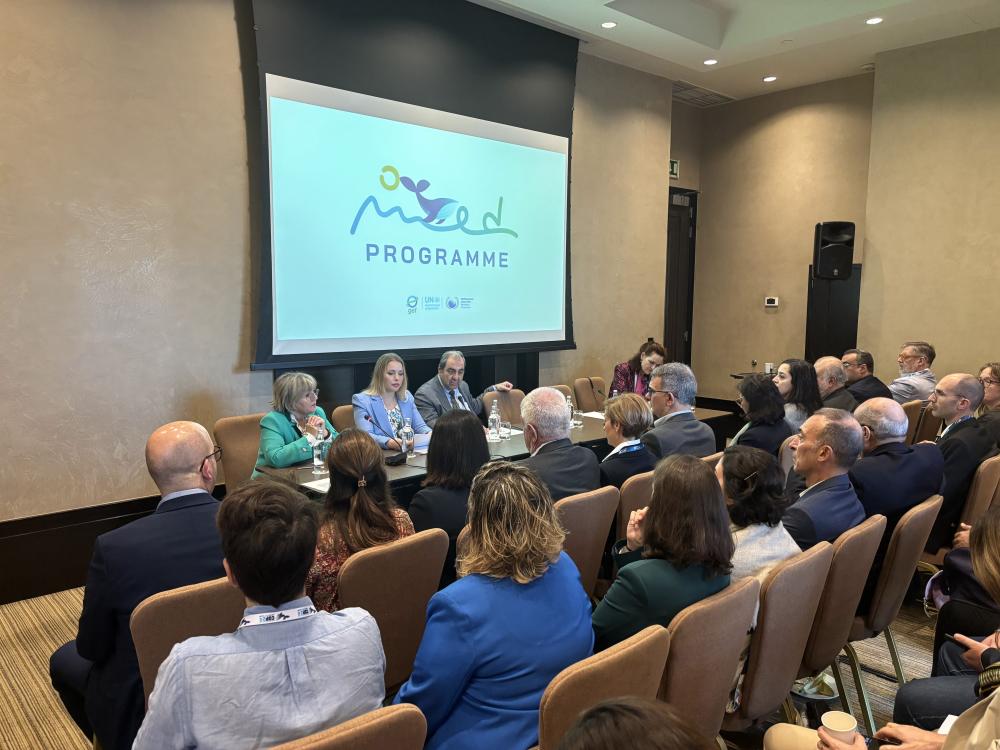
At COP24 of the Barcelona Convention, held in Cairo from 2–5 December 2025, the Mediterranean community gathered with a shared recognition: the environmental challenges facing the region no longer fit neatly within sector boundaries. Pollution, groundwater depletion, coastal vulnerability and accelerating climate impacts are intersecting pressures that require countries and institutions to work in ways that are more coordinated, more informed and more connected than ever before. The Mediterranean Sea Programme (MedProgramme), implemented by the UNEP/MAP in partnership with its Regional Activity Centres, executing organisations, scientific bodies and financial institutions, has become a practical demonstration of how this shift is taking place.
The MedProgramme did not set out to create a new institution. Its impact is quieter, more organic and ultimately more profound: it has encouraged ministries, regional centres, scientific institutions and financial partners to work together in ways that simply were not the norm a decade ago.
From the outset of the COP24 side event, UNEP/MAP Coordinator Tatjana Hema captured this evolution when she urged participants to focus on the region’s direction of travel, emphasising that “looking ahead is more important, than what we have achieved.” Her point was not about diminishing progress, but about recognising that integration becomes meaningful only when it continues to grow.
Throughout the event, this sense of emerging coherence became clear. Scientific contributions from bodies such as Plan Bleu, the United Nations Educational, Scientific and Cultural Organization (UNESCO) and the MEDPOL Programme no longer stood apart from governance discussions led by the Priority Actions Programme Regional Activity Centre (PAP/RAC) or investment perspectives brought by the European Bank for Reconstruction and Development (EBRD). Instead, they formed a connected picture: groundwater data feeding coastal planning; governance assessments shaping pollution monitoring; Nexus dialogues opening pathways for more coordinated national policies; and technical clarity creating the conditions for investment to follow. The Programme’s achievements in Libya, presented by the Specially Protected Areas Regional Activity Centre (SPA/RAC), underscored that even under difficult circumstances, integrated approaches can build capacity, strengthen institutions, and engage local actors. This multi-partner ecosystem, spanning RACs, global UN bodies, regional scientific centres, development banks, and national institutions, is the operational heart of the MedProgramme’s integration model.
Countries reflected this shift in their interventions. Montenegro spoke of using Integrated Coastal Zone Management (ICZM) tools to support more coherent coastal planning. Tunisia highlighted how Maritime Spatial Planning (MSP) training and shared methodologies were informing national strategy updates. Morocco stressed the value of regional tools for meeting commitments under multiple conventions, while Lebanon described how MedProgramme activities helped shape draft legislation and policy frameworks. These were not isolated success stories but examples of a region learning to translate technical knowledge into governance practice.
Cross-basin exchanges with the Black Sea and Danube regions reinforced the idea that environmental challenges do not respect boundaries and that regional networks strengthen national responses.
By the close of COP24, a clear picture had emerged. The MedProgramme’s greatest contribution may not be any single output, but the way it has helped institutions work together: science informing policy, policy guiding investment and investment reinforcing resilience.
This cooperation is possible only because of the Programme’s diverse partnership architecture, which remains one of its defining strengths. It is a quiet transformation, but a significant one: showing that the Mediterranean is laying the foundations of a more integrated, cooperative, and forward-looking environmental governance system.