

Tunisia launches the preparation of its National Action Plan Plus (NAP+) under the FishEBM MED project
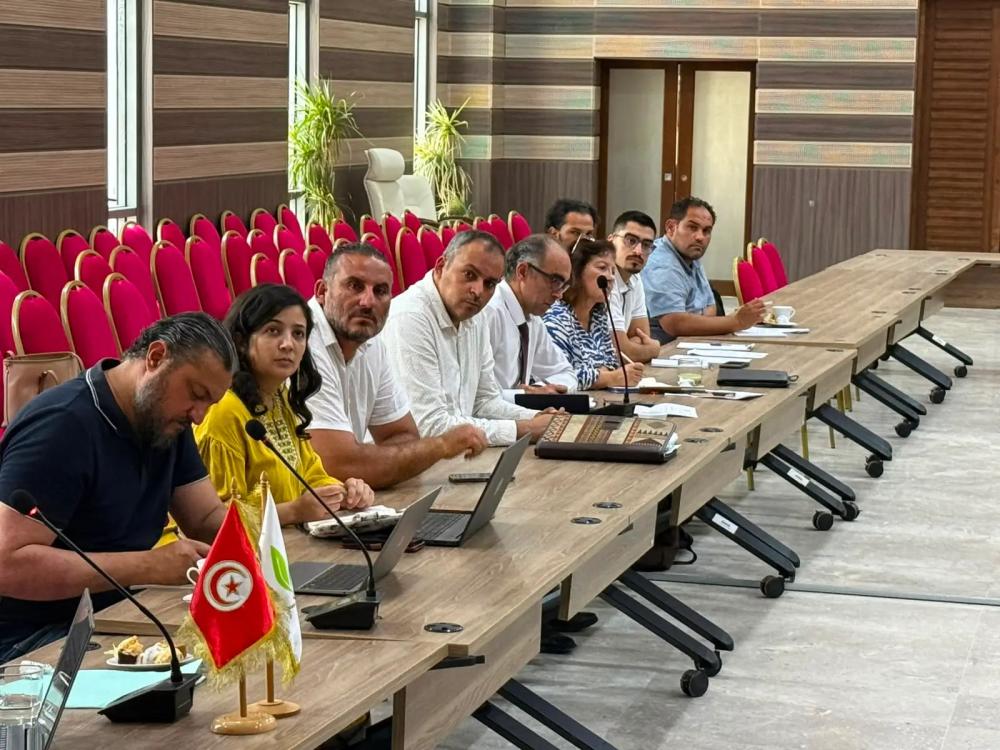
On 21 July 2026, the Ministry of Environment of Tunisia, with the support of the Specially Protected Areas Regional Activity Centre (SPA/RAC), convened the first national stakeholder meeting under the FishEBM MED project to launch the participatory process for preparing Tunisia’s National Action Plan Plus (NAP+) and its associated Investment Plan.
The meeting brought together representatives of national institutions responsible for fisheries, environment, coastal management, research and other relevant sectors, marking the beginning of a collaborative process that will guide the preparation of Tunisia’s NAP+.
In her opening remarks, Ms. Samia Kchok, National Focal Point at the Ministry of Environment, highlighted Tunisia’s efforts to advance the blue economy, notably through the ongoing development of the National Blue Economy Strategy, supported by the World Bank, including a national assessment of opportunities and constraints, a strategic roadmap and an investment framework.
Building on Tunisia’s blue economy efforts
Building on these national efforts, the FishEBM MED project will support Tunisia in preparing a National Action Plan Plus (NAP+) that integrates biodiversity conservation and sustainable fisheries into the blue economy, together with an Investment Plan and a demonstration pilot activity.
Rather than creating a parallel process, the NAP+ is designed to build on existing national initiatives by translating strategic priorities into concrete actions for the fisheries and biodiversity sectors.
Participants were then introduced to the objectives and regional approach of the FishEBM MED project, funded by the Global Environment Facility (GEF), which promotes ecosystem-based fisheries management while supporting the transition towards a sustainable and resilient blue economy across the Mediterranean.
The workshop also presented the methodology for preparing the NAP+ and the Investment Plan, including the implementation roadmap, the mapping of institutional stakeholders, and the roles and responsibilities of the different institutions involved throughout the process.
Key priorities and next steps
The discussions highlighted several strategic issues that will guide the forthcoming work. Participants exchanged views on the demonstration pilot activity planned under the project and emphasized the importance of strengthening coordination among institutions.
They also recommended broadening the composition of the Steering Committee and ensuring the active participation of professional organizations, civil society, media representatives and fishers throughout the consultation process.
Particular attention was given to the Investment Plan, which was recognized as a strategic tool for facilitating the mobilisation of financial resources to support the implementation of the priority actions identified through the NAP+.
The meeting concluded with a shared commitment to continue the participatory process through a series of technical consultation meetings starting in September 2026, with the objective of finalising the NAP+ by the end of 2026.
This article was created by Dorra Maaqui and was sourced from SPA/RAC website.