

Morocco Advances Integrated Solutions for Water, Coasts and Climate
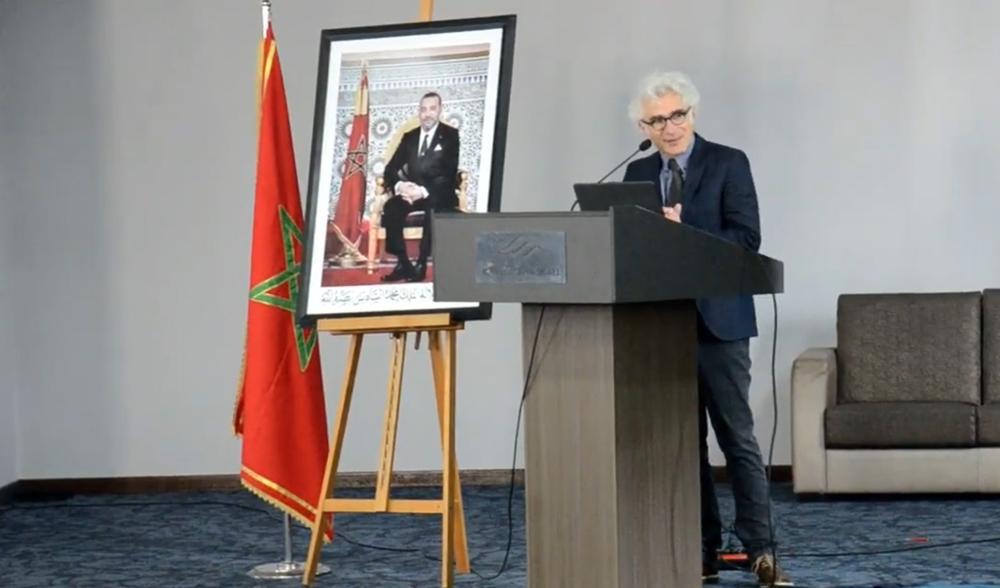
National institutions, regional authorities, technical experts and international partners gathered in Rabat and Tangier in May 2026 to advance one of the Mediterranean’s most pressing transitions: moving from environmental planning and fragmented sectoral action towards integrated, investment-ready implementation.
Organised under the framework of the Mediterranean Sea Programme (MedProgramme), the workshops brought together actors working across water management, climate adaptation, biodiversity, pollution prevention, fisheries, coastal planning and environmental financing to identify how Morocco can operationalise integrated solutions at territorial level.
Implemented by the United Nations Environment Programme Mediterranean Action Plan (UNEP/MAP) and the European Bank for Reconstruction and Development (EBRD) and financed by the Global Environment Facility (GEF), the MedProgramme supports 10 Mediterranean countries in addressing interconnected environmental challenges through approaches linking science, governance, policy and investment.
A consistent message emerged across both workshops: Morocco already has strong strategies, technical studies and institutional frameworks in place. The next challenge is implementation.
Throughout the discussions, participants repeatedly highlighted that environmental pressures can no longer be managed separately. Water scarcity, coastal degradation, biodiversity loss, pollution, urbanisation and climate change are deeply interconnected and require integrated responses.
The workshops showcased how Morocco is increasingly applying this approach through integrated coastal planning, Nexus methodologies and ecosystem-based management.
One of the central initiatives presented was the development of the Regional Coastal Plan (SRL) for the Tangier–Tetouan–Al Hoceima Region. Developed under the MedProgramme with technical support from PAP/RAC, the SRL combines environmental, socio-economic, territorial and climate analyses into a legally anchored planning framework aligned with Morocco’s coastal law.
The process integrated scientific analysis, participatory consultations and long-term territorial scenarios extending to 2045. Experts described the SRL as a tool capable of linking ecosystem protection with sustainable economic development while supporting long-term territorial resilience.
Discussions also highlighted the importance of improving interoperability between institutions and data systems. Stakeholders repeatedly pointed to fragmentation of information and weak coordination as major barriers to implementation.
“Today, the issue is not the lack of data, but its fragmentation. We need to move from data ownership to decision-making ownership,” noted one technical expert during the Tangier discussions.
A major focus of the workshops was the Water-Energy-Food-Ecosystems (WEFE) Nexus assessment led by GWP-Med in the Tangier–Tetouan–Al Hoceima Region.
The assessment applies a “Source-to-Sea” approach, linking upstream water management, agriculture, energy systems and ecosystems with downstream coastal impacts. After an initial regional diagnostic phase, the work moved into quantitative modelling of the Loukkos basin, one of Morocco’s strategic agricultural and ecological areas.
The modelling explored different climate and development scenarios up to 2050. Results showed that climate stress could significantly increase water deficits, reduce ecological flows, intensify groundwater pressure and threaten ecosystem health if current trends continue.
At the same time, the analysis demonstrated that integrated measures can substantially improve resilience. Agroecological practices, wastewater reuse, desalination, renewable energy integration and governance reforms emerged as key solutions capable of reducing water deficits while improving sustainability and reducing emissions.
The discussions also highlighted the complexity of environmental decision-making. Some measures improve efficiency while creating new trade-offs. For example, localised irrigation can reduce water consumption but also decrease groundwater recharge. The Nexus approach was therefore presented not as a search for perfect solutions, but as a tool for identifying balanced and informed choices.
One of the strongest messages emerging from the workshops was the importance of translating technical assessments into operational projects.
A flagship example presented during the sessions was the WEFE Nexus initiative at the Oued El Makhazine Dam. The project combines floating solar energy, irrigation efficiency and precision agriculture to reduce energy consumption and optimise water use across agricultural perimeters in the Loukkos basin.
Developed through collaboration between regional authorities, technical experts and GWP-Med, the initiative is currently undergoing a feasibility study financed through the MedProgramme. The study also includes preparation of a concept note for the Green Climate Fund, with the objective of transforming the initiative into a bankable climate adaptation and mitigation project.
“These initiatives show how integrated planning can be transformed into concrete solutions that support both sustainability and economic resilience,” participants noted during the workshop discussions.
The role of financing emerged as a central theme throughout the event. EBRD presented ongoing wastewater reuse, climate-resilient infrastructure and industrial depollution projects in Morocco supported through blended finance approaches combining grants, loans and investment tools.
Participants repeatedly stressed that future environmental action in Morocco must focus on fewer but larger integrated projects capable of attracting investment and generating measurable impact.
The workshops also marked the beginning of Morocco’s National Replication Atlas process under the MedProgramme. The objective is to identify priority actions, pilot initiatives and investment opportunities that can be scaled nationally and replicated elsewhere in the Mediterranean.
Stakeholders proposed a broad range of priorities for future replication and investment, reflecting the integrated nature of Morocco’s environmental challenges. These included strengthening integrated coastal management, groundwater protection and ecosystem restoration, while expanding wastewater treatment and reuse systems, pollution monitoring and hazardous waste management. Participants also highlighted the importance of accelerating climate adaptation efforts through precision agriculture, renewable energy integration and biodiversity protection, alongside the development of stronger environmental data systems and regional observatories capable of supporting evidence-based decision-making and long-term territorial planning.
A strong consensus emerged that future programming should prioritise integrated, territorially grounded and investment-oriented initiatives rather than fragmented stand-alone interventions.
Participants also highlighted the importance of aligning future actions with Morocco’s National Sustainable Development Strategy, National Adaptation Plan, Blue Economy Strategy and biodiversity priorities.
Across both days, the workshops positioned Morocco as an increasingly important regional laboratory for integrated environmental management in the Mediterranean.
The discussions confirmed that the country has developed strong technical and institutional foundations, including integrated planning frameworks, monitoring systems, climate adaptation strategies and financing mechanisms. However, the workshops also made clear that the next phase must focus on implementation, coordination and scaling.
Participants concluded that integrated approaches supported by the MedProgramme provide a practical pathway for linking policy, science and investment while supporting climate resilience, ecosystem protection and sustainable development across the Mediterranean region.