

ASM 2026 Partnerships that work, Results that matter
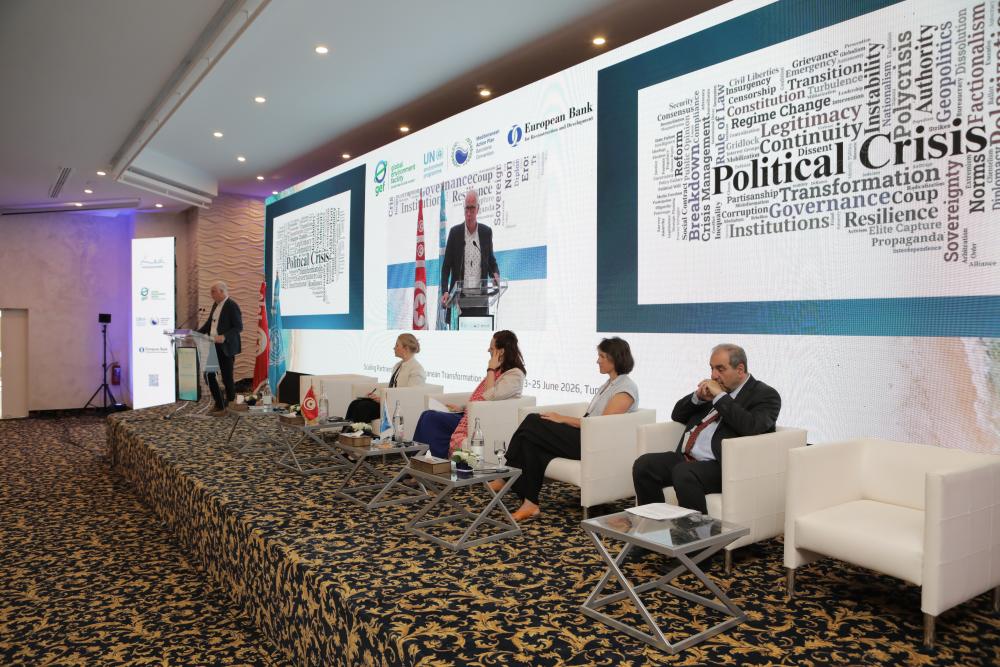
In Tunis, at the final Annual Stocktaking Meeting of the MedProgramme, no one needed to pretend that the Mediterranean was simple.
It is not.
It is one sea, but it carries many pressures. Pollution, water stress, biodiversity loss, climate risk, coastal development, hazardous waste and fragile ecosystems are deeply connected. It is also a sea of shared responsibility. No country can protect it alone. No institution can solve its challenges alone. No project, however well designed, can carry the weight by itself.
That was the spirit of the Fourth Annual Stocktaking Meeting of the MedProgramme, held in Tunis from 23 to 25 June 2026 under the theme One Sea, One Vision: Scaling Partnerships for Mediterranean Transformation and Impact.
The meeting marked a concluding milestone for the MedProgramme, but its focus was firmly on what should happen next. How can results be kept alive? How can knowledge become action? How can successful solutions contribute to wider Mediterranean transformation?
Tunisia welcomed the meeting as both a privilege and a valuable opportunity. Tatjana Hema, Coordinator of the United Nations Environment Programme Mediterranean Action Plan (UNEP/MAP), recalled a Tunisian proverb: “One hand alone cannot clap.”
It was more than a ceremonial line. It became the simplest explanation of what the MedProgramme had set out to do.
It brought many hands together.
Over its lifetime, the Programme connected ten countries, regional institutions, scientific organisations, financial partners and implementing bodies around one fundamental idea. Mediterranean environmental problems are connected, so the solutions must also be connected.
Working across Chemicals and Waste, International Waters, Biodiversity and Climate Change Adaptation, the MedProgramme showed that pollution, water, ecosystems, climate resilience and livelihoods cannot be treated as separate concerns.
The Programme did not follow a perfect path. Implementation had to navigate delays, uneven timelines, procurement challenges, data gaps, political instability and the daily difficulty of coordinating many actors across countries and sectors.
Its value lies not in having avoided those difficulties, but in having developed ways to work through them.
That may be one of its most important legacies.
From national action to a shared Mediterranean vision
Hans Bruyninckx challenged participants to move “from project, to programme, to systemic change.” His message captured the wider ambition of the meeting. Sustainability cannot remain a separate consideration. It must become an organising principle for policy, investment and development.
The country experiences showed what this means in practice.
Lebanon demonstrated the importance of coordination when institutions are under pressure. Work across chemicals and waste, water, aquifers and coastal planning required institutions and technical teams to exchange information, align their work and build a shared planning base.
Montenegro showed how different interventions can contribute to one national objective. Coastal planning, aquifer management, the elimination of polychlorinated biphenyls (PCBs), community engagement and fisheries activities all supported stronger coastal and marine governance.
Morocco connected water, energy, food and ecosystems planning, aquifers, pollution reduction, climate resilience and cleaner industrial production within broader national pathways.
Tunisia, as host country, provided one of the clearest examples of integration. Its portfolio linked chemicals and waste, cleaner production, groundwater, wastewater, aquifers and support to national coastal planning.
Libya brought biodiversity, groundwater, offshore monitoring, marine protection and pollution prevention into the same national picture. Its experience showed that even in difficult circumstances, environmental cooperation can continue to build knowledge, capacity and foundations for future action.
These were not polished success stories detached from reality. They were working stories. They revealed the quiet machinery of cooperation through inventories, monitoring, legislation, assessments, plans, procurement, community engagement and institutional patience.
Together, they formed a shared Mediterranean picture from very different national realities.
Results that can travel
The next challenge is to ensure that these results do not remain confined to the places where they were first produced.
The idea that the MedProgramme created “results that can travel” captures the purpose of the Replication and Upscaling Portfolio. A solution tested in one country should be understandable and adaptable elsewhere. A method developed by one partner should become accessible to others. A useful strategy should not disappear inside a final report.
Replication requires more than identifying a successful activity. It depends on country ownership, a clear policy entry point, evidence that the solution works, realistic next steps, suitable partners and an understanding of what is still required.
The MedProgramme generated plans, inventories, standards, assessments, maps, strategies, pilots, tools and studies. Preserving them is not enough. They must be connected and made useful.
The Knowledge Management Platform links programme data, knowledge and decision-making. It preserves results, supports the exchange of lessons and strengthens the relationship between science, policy and practice.
Its value is practical. An approach developed in Tunisia should be discoverable by a team in Montenegro. A lesson from one project should improve the design of the next.
That is how programme knowledge becomes regional capacity.
From demonstration to investment
Knowledge alone will not deliver change at scale. Proven solutions also need credible pathways towards implementation and finance.
Environmental value does not automatically make a proposal ready for investment. A credible pathway requires national ownership, institutional leadership, technical preparation, feasibility work, costing, safeguards, delivery partners and an appropriate financing route.
The objective is not to claim that every MedProgramme result is already bankable. It is to identify which solutions could be scaled, where they may be relevant and what must happen next.
Replication is not automatic. It must be prepared.
Finance must also enter environmental programme design earlier. When national priorities, technical work and investment planning develop separately, promising solutions can lose momentum. When they are connected from the beginning, countries have a better chance of moving from evidence to implementation.
A shared call for action
The meeting culminated in the adoption of the Tunis Call for Action.
Through the Call, participating countries established a shared direction for carrying MedProgramme knowledge, partnerships and proven approaches forward. It calls for country-owned replication and upscaling, stronger investment pathways, wider partnerships and the integration of MedProgramme results within national and regional cooperation frameworks.
It gave the meeting a conclusion that was also a beginning.
The Mediterranean continues to face severe pressures, and many results still require financing, ownership and sustained institutional support. But the MedProgramme created something valuable. It created a way of working.
It showed that regional frameworks can reinforce national priorities. It showed that science can influence policy when translated into practical tools. It showed that knowledge must be managed rather than scattered and that finance must enter the conversation early.
Above all, it showed that partnership is not a slogan. It is work.
At the final Annual Stocktaking Meeting, the MedProgramme did not simply count what had been achieved. It asked what could continue.
Taylor Hanshaw of the Global Environment Facility (GEF) captured the wider significance of this approach when he stated that “integration is now a fundamental principle in GEF programming.” The MedProgramme has shown what that principle can mean in practice.
Tatjana Hema offered the final perspective. The MedProgramme stands “not at the end of the story, but at the beginning of a broader Mediterranean transformation.”
Its next life will be measured by whether countries use its tools, whether partners keep its knowledge alive, whether investment follows evidence and whether Mediterranean cooperation continues to move from project to system.
One hand cannot clap on its own. But in Tunis, many hands did.