


World Youth Skills Day: Young Mediterranean voices helping shape the future of environmental action
The 2026 edition of World Youth Skills Day, celebrated under the theme “Skills for a Peaceful and Sustainable Future”, recognizes the importance of equipping young people with the knowledge, competencies and leadership skills needed to address today’s global challenges. Alongside technical expertise, the United Nations emphasizes the value of communication, collaboration, civic engagement and the ability to turn knowledge into meaningful action.
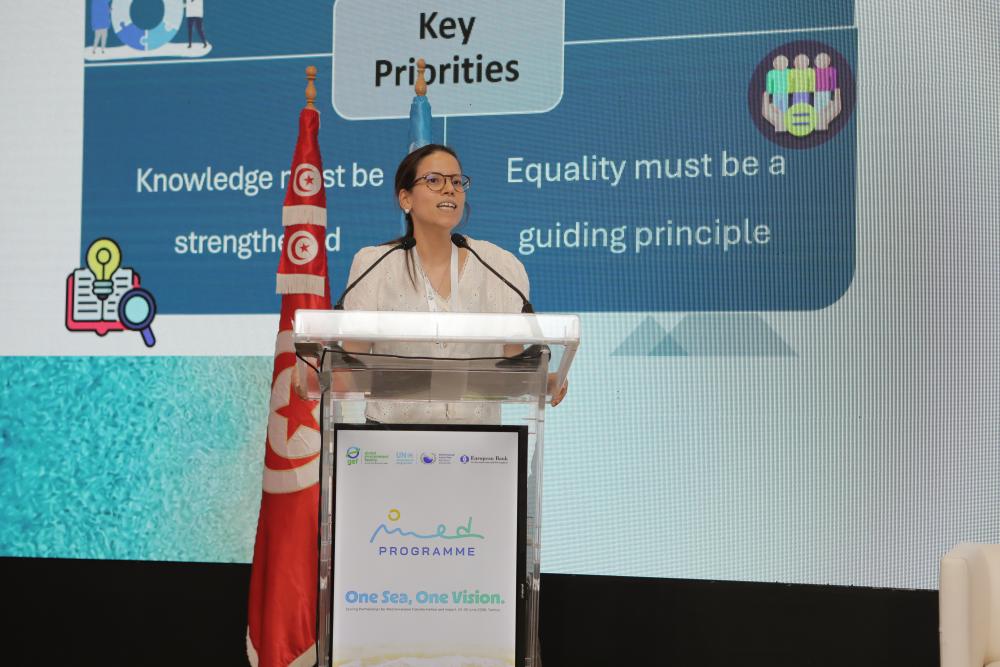
These principles are increasingly being translated into practice across the Barcelona Convention system. One recent example was the Fourth Annual Stocktaking Meeting of the GEF-UNEP Mediterranean Sea Programme (MedProgramme), held in Tunis, Tunisia, from 23 to 25 June 2026, where a group of young participants (Shabab Al-Bahr Al-Abiad Al-Mutawassit) developed a series of recommendations for environmental action in the Mediterranean.
The group consisted of nine young participants from across the Mediterranean, including three young members of the SPA/RAC team: two engineering students completing internships and one early-career professional.
Young voices for a shared Mediterranean
Working under the MedProgramme theme “One Sea, One Vision”, the group developed a series of recommendations aimed at strengthening environmental action across the Mediterranean.
Their recommendations highlighted the importance of:
- ensuring meaningful youth participation in environmental governance and decision-making;
- strengthening regional partnerships to address shared Mediterranean challenges;
- promoting knowledge exchange and learning from successful experiences across the region;
- communicating environmental impact through compelling stories that connect with people;
- encouraging solution-oriented communication and positive environmental narratives through clear and accessible messaging and compelling storytelling;
- adopting a people-centred approach to conservation that connects environmental challenges with tangible opportunities for communities and future generations;
- involving young researchers and supporting innovative, impact-driven initiatives.
Together, these recommendations reflect a vision of environmental governance that is collaborative, inclusive and focused on practical solutions.
Contributing to regional cooperation
The recommendations were presented during the Fourth Annual Stocktaking Meeting of the GEF-UNEP Mediterranean Sea Programme, which convened representatives of beneficiary countries, implementing and executing agencies, regional and international organizations, financial institutions, civil society and the private sector to review progress, exchange experiences and explore opportunities for scaling up successful initiatives across the Mediterranean.
As one of the MedProgramme’s executing partners, SPA/RAC contributed to discussions on marine biodiversity conservation, ecosystem-based management, marine protected areas, ecosystem restoration, sustainable blue economy development, regional cooperation, governance frameworks and science-policy interaction.
The meeting also provided an opportunity to showcase progress achieved through FishEBM MED and Child Project 3.1. Representatives from Libya, Montenegro, Morocco and Tunisia shared experiences, lessons learned and innovative approaches developed through project implementation, demonstrating tangible environmental and socio-economic benefits.
SPA/RAC also participated in the launch of the MedProgramme Replication Portfolio, an initiative designed to facilitate the transfer and scaling up of successful solutions across the region.
Investing in the next generation
Empowering young people to contribute to environmental governance is an investment in the Mediterranean’s future. By encouraging dialogue, building skills and creating opportunities for meaningful participation, initiatives such as the youth group (Shabab Al-Bahr Al-Abiad Al-Mutawassit) help prepare a new generation of professionals ready to contribute to a healthier, more resilient and sustainable Mediterranean.
This article has been created by Dorra Maaoui and has been fully sourced from SPA/RAC website