

Turning Awareness into Protection: Montenegro’s Informal Recycling Communities
Turning Awareness into Protection from Hazardous Chemicals for Montenegro’s Informal Recycling Communities
In Montenegro’s informal recycling sector, survival and exposure often go hand in hand.
Each day, workers handle discarded electronics, stripped cables and broken appliances, frequently without adequate protective equipment. In the process, they are exposed to hazardous substances including mercury, lead, dioxins and Persistent Organic Pollutants (POPs). According to the World Health Organization, chemical exposure contributes to at least 2 million deaths globally every year, and global chemical production is projected to double by 2030.
For communities working in informal recycling, these risks are not distant statistics. They are part of daily life. Scientific evidence shows that mercury exposure is linked to infertility, hormonal disorders and complications in pregnancy. Lead exposure is associated with developmental delays and learning disabilities in children. Persistent organic pollutants can accumulate in the body and, in some cases, pass from mother to child during pregnancy. In settings where safety measures are limited and awareness is low, these global risks take on a deeply personal dimension.
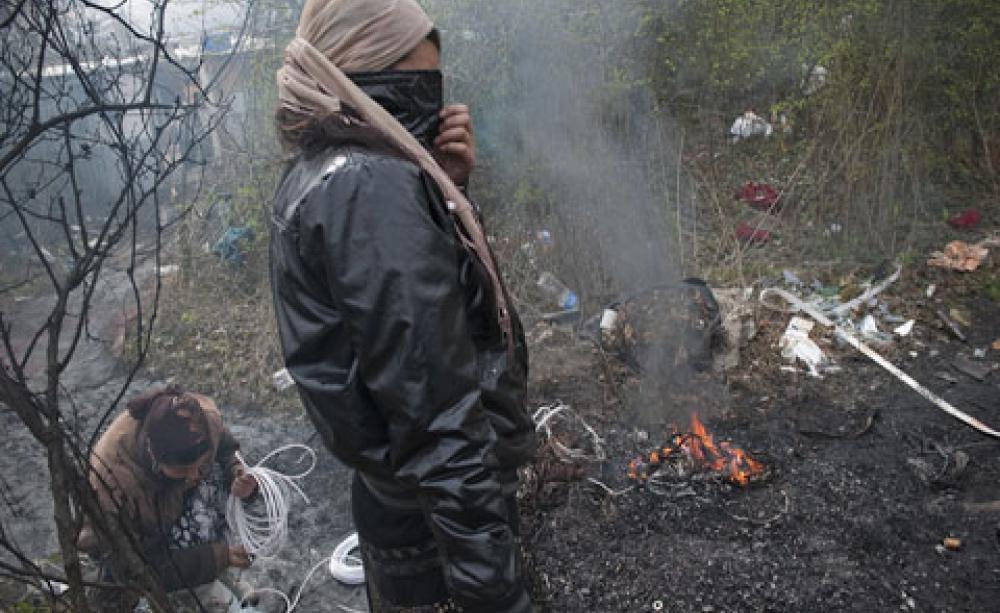
Semsa, a mother of seven living in Berane of Podgorica, spends her days collecting and sorting secondary raw materials with her husband. She also sells second-hand goods at a local flea market. When she is out working for five to seven hours, her daughter cares for the younger children.
Her primary task is cable stripping, done by hand with knives. Injuries are common. “A close cousin of mine lost his eye while using a cutting machine. Still, we can’t afford to stop,” she says. Sometimes, when there is no alternative, materials are burned to extract valuable metals, releasing toxic fumes into the air. “We don’t have safety equipment, just leftover COVID masks, which aren’t really protective.”
Financial uncertainty shapes every decision. This work is not a choice, she explains, but a necessity. Yet her hopes are clear: “I want the best for my kids. I want them to finish school, get a proper education, and find stable jobs. Education is the key.” Recognising these realities, the Global Environment Facility-funded Mediterranean Sea Programme (MedProgramme), implemented by the United Nations Environment Programme under the Mediterranean Action Plan, is supporting Montenegro to eliminate hazardous chemicals and wastes while strengthening protection for vulnerable communities. In June 2025, the programme advanced safe disposal efforts alongside awareness-raising and training activities for those most at risk in the informal sector.
Guido van de Coterlet, project manager at TAUW Group, an environmental consultancy supporting the MedProgramme’s awareness-raising and training activities on chemicals and hazardous waste in Montenegro, stresses that effective risk reduction requires more than technical solutions alone. Communication and training must reflect lived realities. Women and men often face different exposure patterns and responsibilities. Women frequently balance recycling work with childcare, increasing the importance of understanding how toxic substances such as lead and POPs can affect children’s health and development. Men, often primary earners, need practical solutions that reduce exposure without undermining livelihoods, including safer alternatives to open cable burning.
By tailoring communication and capacity-building efforts to specific roles and social dynamics, the programme aims to build trust, strengthen knowledge and reduce harm. Eliminating hazardous chemicals is not only an environmental priority; it is a public health imperative and a matter of social equity. For families navigating the uncertainties of informal work, safer chemicals management represents more than compliance. It offers the possibility of protecting health today while opening pathways to greater stability and opportunity tomorrow.
The Chemicals and Waste work under the GEF-funded MedProgramme delivers measurable progress across the Mediterranean. Implemented by UNEP/MAP together with UNOPS, national ministries and technical partners, the Programme is advancing the safe removal and disposal of hazardous chemicals while strengthening awareness among the communities most exposed. By December 2025, 401 tonnes of PCB waste have been safely disposed of in Algeria, with 271 tonnes underway in Lebanon, and preparations for an additional ~700 tonnes in Albania, Bosnia and Herzegovina, Montenegro and Tunisia. In parallel, 50–100 tonnes of mercury are being addressed in Tunisia. Together, these interventions reduce the region’s stock of dangerous pollutants, improve national chemicals management systems and support partners on the ground—from government institutions to NGOs and specialist organisations—to protect public health and the environment.