

Mediterranean solutions are ready to scale: The Tunis Call for Action carries the MedProgramme legacy forward
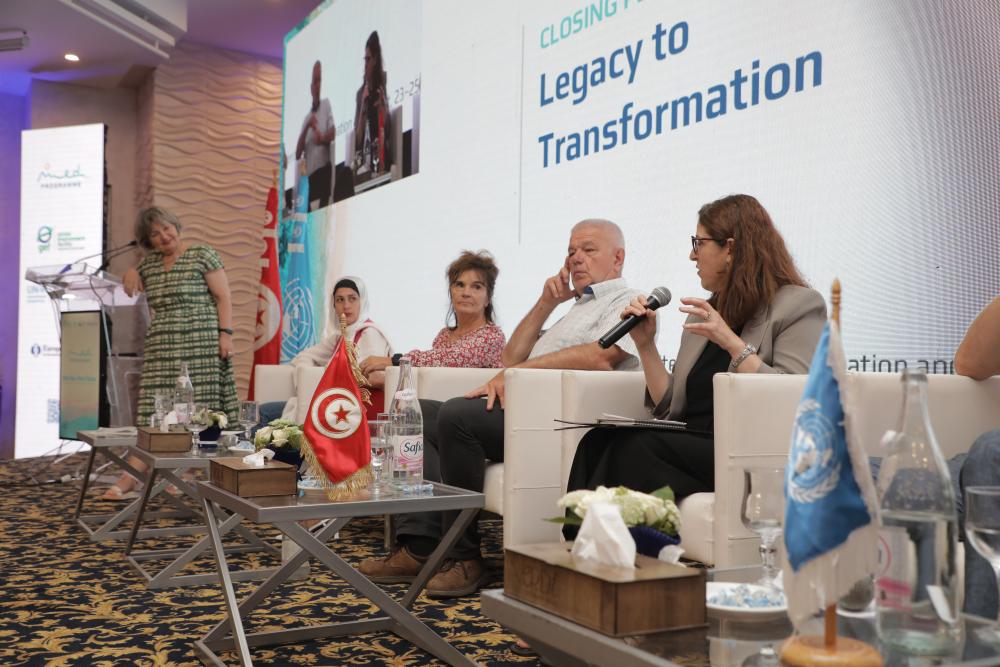
The MedProgramme’s final Annual Stocktaking Meeting in Tunis did not end with a closing statement. It ended with a direction.
Adopted on 25 June 2026, the Tunis Call for Action captures the shared message that emerged from countries, partners and institutions during the Fourth Annual Stocktaking Meeting of the MedProgramme: Mediterranean solutions are ready to scale. The Call sets out how the Programme’s results, tools, lessons and partnerships can continue to support country-owned priorities, investment-ready action and long-term regional cooperation.
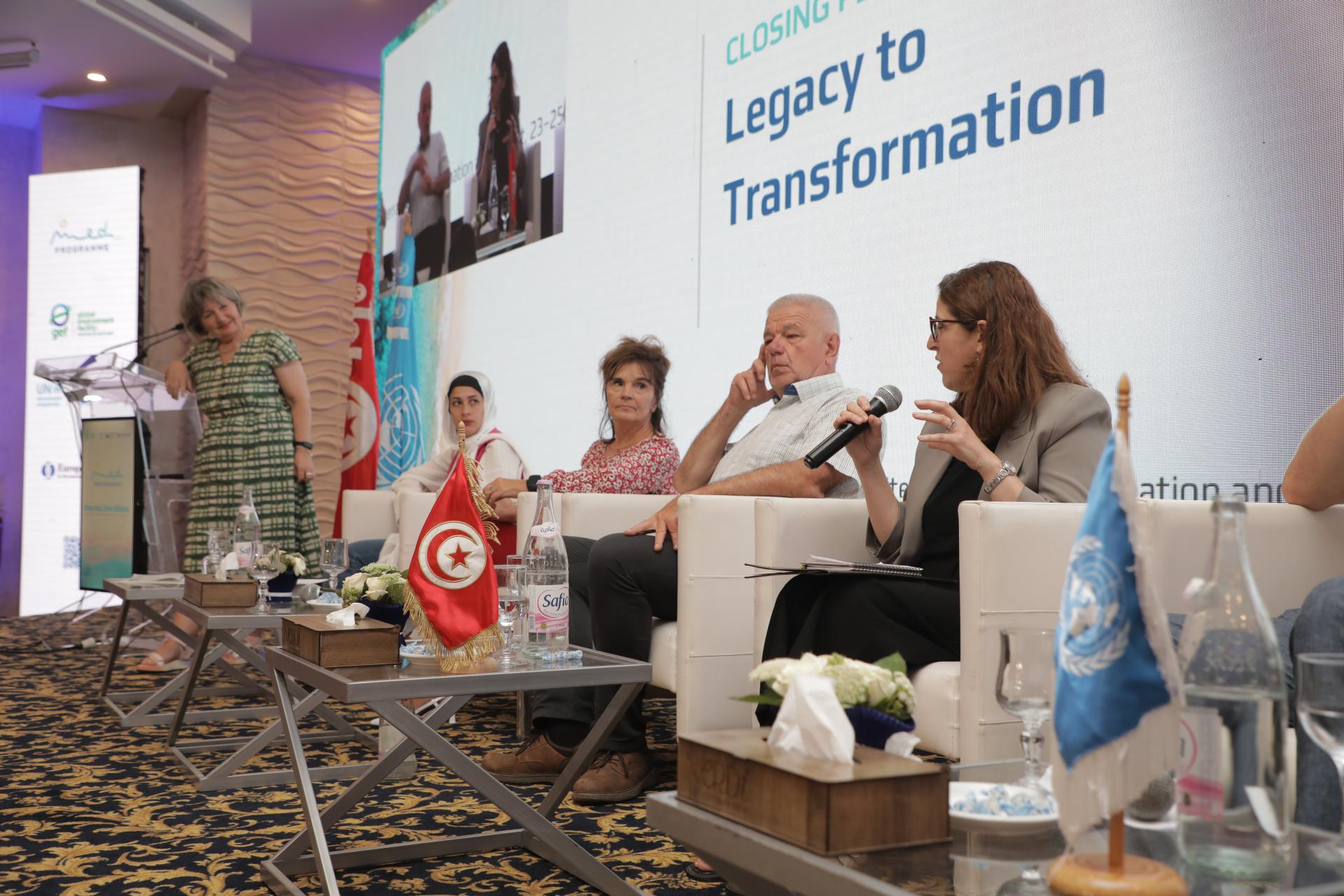
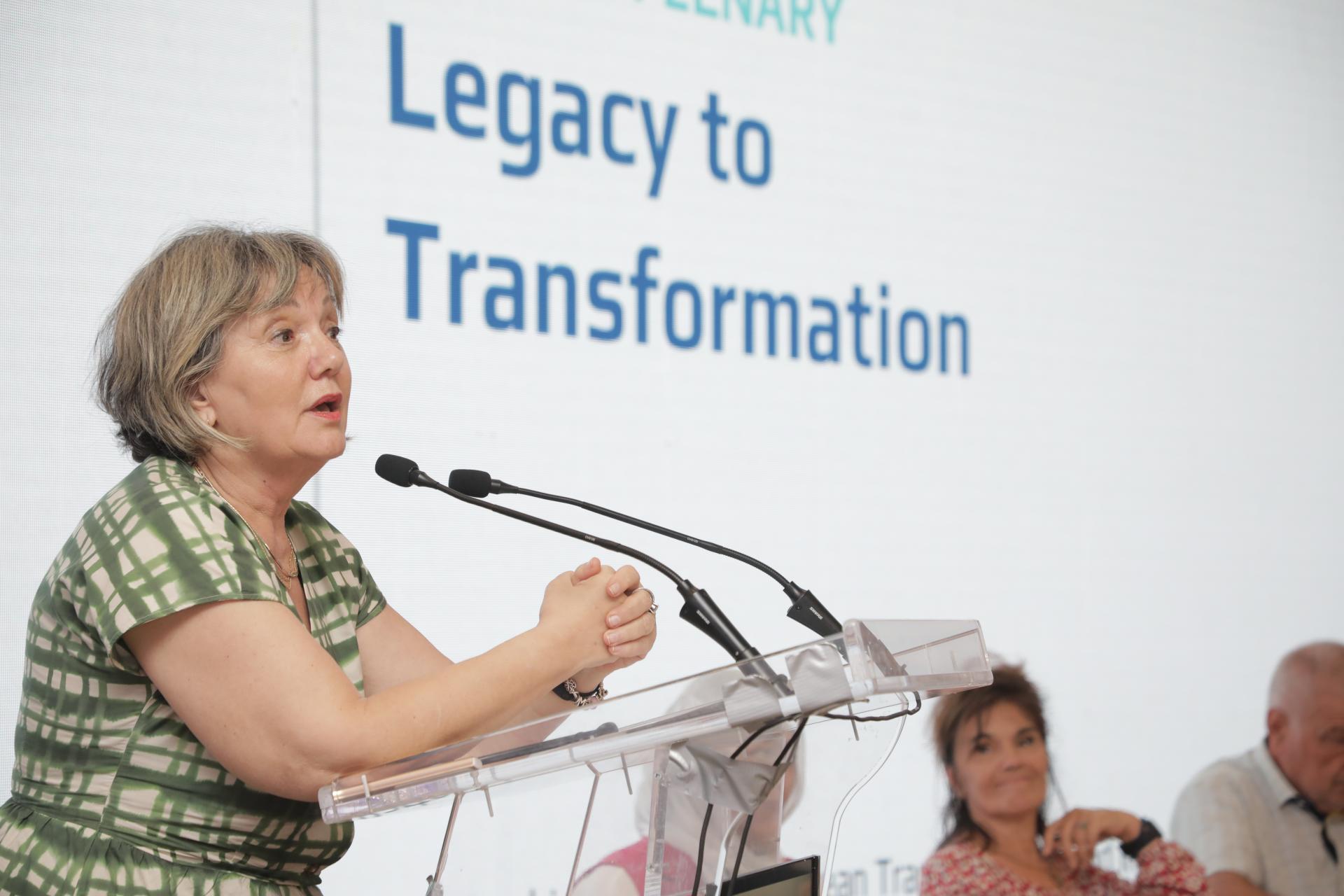
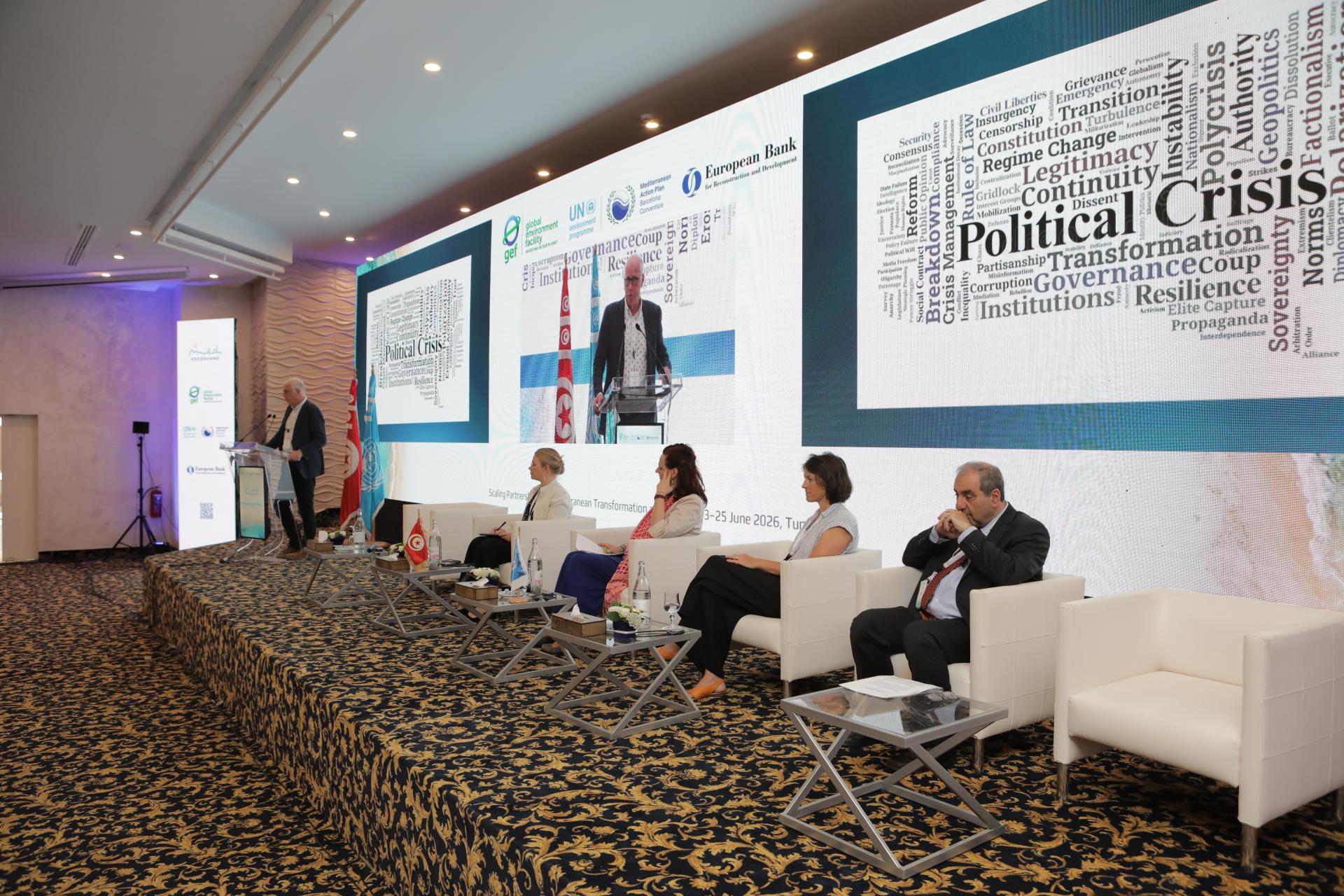
The meeting, held in Gammarth / Tunis from 23 to 25 June 2026, was the final annual gathering of the MedProgramme. Convened by UNEP/MAP through the MedProgramme Coordination Unit, with the Global Environment Facility as donor and UNEP and EBRD as Implementing Agencies, it was designed as a transition platform: from Programme delivery to continuity, replication, upscaling, investment and future Mediterranean cooperation.
From stocktaking to direction
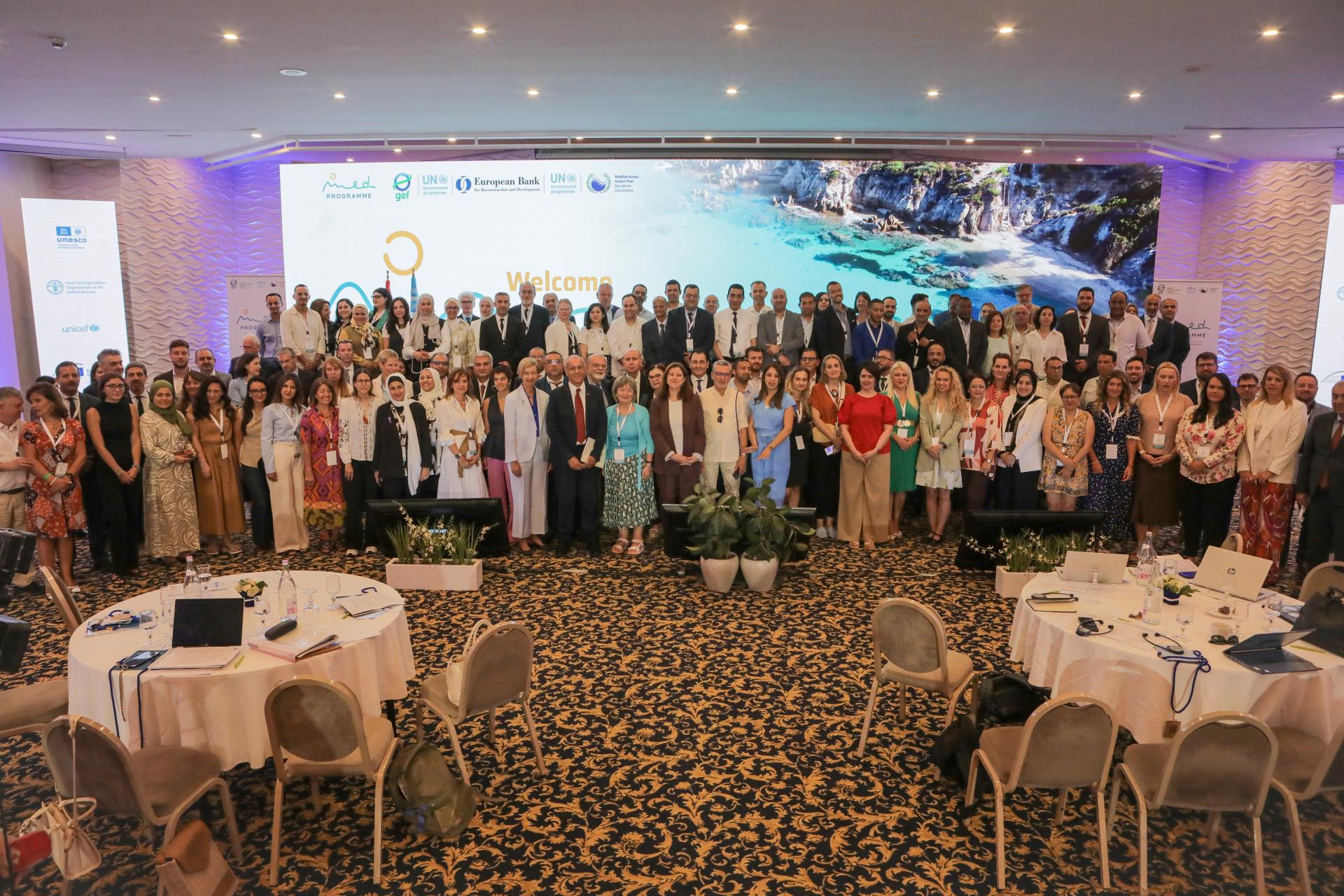
The Fourth ASM brought together 110 listed participants, including 52 Member State representatives from nine delegations: Algeria, Bosnia and Herzegovina, Egypt, Lebanon, Libya, Montenegro, Morocco, Tunisia and Türkiye. Across three days, countries and partners reviewed MedProgramme achievements, shared lessons, presented tools and experiences, and discussed how results could be carried forward under the UNEP/MAP–Barcelona Convention system.
The Tunis Call for Action grew out of that process. It was not a standalone document prepared outside the discussion. It reflected the conversations that took place during the ASM: what countries need, what partners can support, what has already been tested, and what should happen next.
The Call recognises the Mediterranean Sea as a shared ecosystem of global importance and acknowledges the MedProgramme’s role in promoting integrated solutions for pollution reduction, climate resilience, biodiversity conservation, water security, sustainable coastal development and environmental governance. It also recognises the Programme as a pioneering multi-partner and multi-domain initiative that mobilised investments, strengthened regional cooperation, generated tools and methodologies, and created a foundation for future action.
Its message is simple: the Mediterranean does not need to start from zero.
The MedProgramme has produced experience that can now be used. The task ahead is to organise that experience, support countries in applying it, and connect it to the partnerships and financing needed for wider impact.
What the Tunis Call asks for
The Tunis Call for Action is organised around three priorities: Strategic Direction, Implementation and Investment, and Partnerships, Knowledge and Inclusion.
Under Strategic Direction, the Call asks countries and partners to scale up the MedProgramme legacy through a Mediterranean Replication and Upscaling Portfolio owned by countries. This portfolio is intended to consolidate and expand successful solutions, tools, policies and approaches at national level and across the region. It also calls for the next generation of Mediterranean initiatives to build on MedProgramme lessons and achievements, and for results to be embedded in the UNEP/MAP–Barcelona Convention system and other Mediterranean governance frameworks.
Under Implementation and Investment, the Call moves from results to readiness. It calls for nationally defined priorities, including regional activities, to be transformed into investment-ready actions through project pipelines, financing strategies and bankable programmes capable of attracting public, private and blended finance. It also calls on UNEP/MAP and associated partners to promote a Mediterranean Environmental Investment Platform to mobilise financial institutions, development banks, donors, climate and biodiversity funds, philanthropic organisations and the private sector.
The Call also invites partners to strengthen integrated implementation through Source-to-Sea approaches, the Water-Energy-Food-Ecosystems Nexus, Integrated Coastal Zone Management, Marine Spatial Planning, climate adaptation and mitigation, sustainable blue economy initiatives and nature-based solutions.
Under Partnerships, Knowledge and Inclusion, the Call recognises that scaling solutions is not only a technical process. It depends on cooperation among governments, conventions, regional organisations, financial institutions, civil society, academia, the private sector, youth and local communities. It also depends on national expertise, capacity development, gender equality, youth engagement, inclusive participation, environmental education and communication.
Knowledge as a bridge to action
This is where the Knowledge Management Platform becomes central.
The ASM discussions showed that the MedProgramme’s next value lies in making its knowledge usable. Day II of the meeting focused on solutions, innovation and knowledge uptake, including the MedProgramme Replication Portfolio, Knowledge to Action discussions and the Digital Transformation Showcase. The report notes that the Knowledge Management Platform, MapX, dashboards, modelling tools and related digital products were presented as a central MedProgramme legacy. The Platform was framed as a shared regional asset, not a static archive.
This matters because results do not scale by themselves. A technical report, a map, a dashboard, a model, a policy tool or a success story only becomes powerful when it can be found, understood, adapted and used.
The Knowledge Management Platform is therefore part of the pathway from evidence to implementation. It helps preserve institutional memory, keep Programme knowledge accessible, link evidence to policy, and support countries and partners in identifying what can be replicated or scaled.
In practical terms, the Tunis Call turns the Platform from a repository into a launch point. The Platform can help users explore MedProgramme outputs, understand country experience, identify replicable approaches, follow investment and replication pathways, and connect lessons from one part of the Mediterranean to another.
From solutions to finance
The Tunis Call also reflects a key conclusion from the ASM: technical readiness is not the same as investment readiness.
Day III focused on moving from solutions to finance and future cooperation. Breakout groups worked on fast-track pathways for priority areas, including Source-to-Sea / ICZM, circular economy and pollution reduction, ecosystem restoration and the MPA agenda, and climate change adaptation and resilience. Participants identified scalable solutions, interested countries, policy entry points, partners, financing options, first steps and lead contacts.
The Sustainable Finance and Private Sector Engagement session placed MedProgramme results within the wider need for investment-ready environmental action in the Mediterranean. It focused on project pipelines, blended finance, private-sector engagement, IFIs, de-risking, cost-benefit analysis, climate-risk data, ecosystem services valuation, SMEs and the role of the Replication Portfolio as a pipeline tool.
This is one of the most important shifts captured by the Tunis Call. The next phase is not only about showing what was achieved. It is about preparing what can be financed, implemented and scaled.
A shared direction for one shared sea
The Tunis Call for Action is not the end of the MedProgramme story. It is the point where the story becomes useful for the future.
It brings together the Programme’s integrated results, country priorities, partner experience, knowledge products, digital tools and financing discussions into one shared direction for the Mediterranean Sea.
For countries, it reinforces ownership and visibility of national priorities. For partners, it identifies where technical support, cooperation and institutional capacity can make the greatest difference. For donors and financial institutions, it points to a pipeline of ideas that can be developed into investment-ready action. For UNEP/MAP and the Barcelona Convention system, it offers a practical platform for carrying the MedProgramme legacy forward.
The MedProgramme provides the proof. Countries provide the priorities. UNEP/MAP provides the platform. The Tunis Call for Action provides the pathway to scale.
The work now is to keep that pathway open: preserve the knowledge, package the priorities, connect the partners, prepare the investments and continue building a resilient, pollution-free and sustainable Mediterranean.