


Guardians of the Sea: Women in the Marine Protection
Marine and Coastal Protected Area (MCPA) interventions cannot be “gender neutral”. Gender inequalities need to be recognised and addressed for conservation efforts to succeed. Integrating a gender perspective in marine protection means understanding how women and men use and access resources differently, ensuring that women participate fully, benefit from protection measures, and are considered in monitoring, policy and decision-making. When gender is embedded in MCPA governance, outcomes become stronger: resource protection improves, resistance decreases, and opportunities for women’s empowerment grow through livelihoods, income generation and leadership.
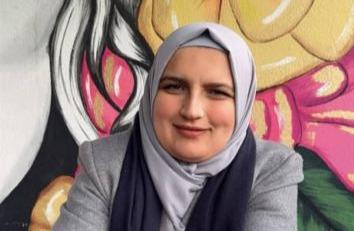
As a valued partner of the GEF financed MedProgramme, Sara Almabruk and the Marine Biology Society of Libya contribute to a more gender sensitive approach to marine conservation. Through Child Project 3.1 – Management Support and Expansion of Marine Protected Areas in Libya, the MedProgramme works with national authorities and civil society to strengthen the MPA network and ensure that participation and inclusion are part of Libya’s coastal governance.
Can you share your professional journey with us?
“I never planned for it, but looking back on my journey, I feel deeply grateful. Eleven years ago, it all started as a simple blog I created during my master’s studies. The goal was to offer reliable resources for those interested in marine biology. I never imagined it would become such a pivotal step in my professional life. The blog would later evolve into a Facebook page, and by the end of 2019, many people would encourage me to establish the society and take on the role of Executive Director.
Sara notes that at the beginning, society’s focus was on citizen science, which helped build strong connections with fishers and marine enthusiasts. It helped her find an answer to often ignored questions: Why should we stop or regulate the catch of a certain species? Why is it endangered? Why is it important to share knowledge with one another? These questions became the foundation of the society’s outreach as the goal was not simply to inform, but to engage, to listen, and to build trust.
“Over time, our work expanded to include regional partnerships, multilingual campaigns, and technical documentation. What started as a quiet initiative became a platform for collaboration, advocacy, and empowerment especially for women and youth in the marine sector. Today, I serve as Executive Director of the Society, and I carry with me the lessons of every step: the fear of starting, the joy of connecting, and the responsibility of leading with purpose.”
As chairperson of the Marine Biology Society of Libya, what is your primary focus?
Sara says that the most important part of MBS work is ensuring that everyone from fishers to marine enthusiasts has access to reliable information. The idea is to present knowledge in a simple, approachable language, so that everyone can understand environmental issues broadly and adopt practical steps that align with Libya’s current realities.
“We also aim to provide researchers, especially women, with opportunities to grow and strengthen their capacities. Our hope is that the next generation of scientists will be better equipped to face the challenges within their field and contribute meaningfully to marine conservation.”
What is the status of women in the marine sector in Libya?
“Women in Libya’s marine sector remain underrepresented in technical, policy, and field-based roles, yet their contributions are steadily growing. Many are active in education, awareness campaigns, and community engagement. Limited access to training or fieldwork often restricts their full participation.”
Sara adds that despite these challenges, women are present in eco-tourism, artisanal industries, and citizen science. “Libya’s ongoing recovery offers a chance to reshape roles in marine governance. With targeted support, women can lead research, conservation, and policy development. Empowering women strengthens both environmental resilience and community well-being.”
What activities are needed to empower women in the marine sector?
“Empowering women requires education, access, and leadership. Activities should include technical training in marine science, conservation, and fisheries management, alongside mentorship programmes connecting experienced professionals with emerging female leaders. Safe access to fieldwork is essential, as is support such as transportation and childcare.”
In Sara’s opinion visibility also matters, and she supports women’s contributions being recognised through media, awards, and inclusion in dialogues. “Supporting women-led initiatives in eco-tourism and sustainable livelihoods can strengthen economic resilience and environmental stewardship. Equity and inclusion must be embedded in governance frameworks to create lasting change.
What challenges and opportunities shaped your journey as a leader?
“In the beginning, I was genuinely hesitant about fieldwork. That fear led me to rely heavily on citizen science as a safer way to engage with marine issues. But everything changed after my first field visit. I was met with warmth and generosity from fishing communities, who shared their knowledge with sincerity and pride. Their openness helped me overcome my hesitation and revealed the power of direct engagement.
Sara describes the academic landscape in Libya as difficult to navigate, with many researchers representing a rigid structure that was hard to access, especially for someone introducing new approaches. “But I also encountered researchers who were genuinely supportive. Their encouragement reminded me that even within rigid systems, there are individuals willing to open doors.”
Absence of a female mentor was another challenge that motivated Sara to become the kind of mentor she, herself once searched for. “I will never forget the support I received from fellow researchers in Tunisia; their encouragement helped me move forward and believe in the impact of regional solidarity.
Through Sara’s leadership and the MedProgramme’s support, gender-responsive marine protection is gaining ground in Libya. Her journey shows how citizen science can open doors to fieldwork, how communities can shape conservation, and how women’s leadership can help define the future of MPAs in the southern Mediterranean.