


Climagining the Future
The Mediterranean basin is officially recognized as a climate change "hotspot," warming faster than the global average. With one in three Mediterranean residents living in coastal areas, protecting these vital shorelines is becoming increasingly complex. Climate change is accelerating, development pressures are growing and decisions taken today will shape the resilience of coastal communities for decades.
But how do policymakers plan for a future that remains uncertain?
To help answer that question, Mediterranean partners are using Climagine, a participatory foresight tool that brings together science, local knowledge and strategic planning to support climate-resilient coastal management.
Developed by Plan Bleu, a UNEP/MAP Regional Activity Centre, within the Barcelona Convention system and building on decades of territorial foresight expertise, Climagine helps stakeholders explore how coastal regions might evolve under different climate and development scenarios , and identify practical solutions before problems become crises.
“Planning for climate change cannot rely on scientific projections alone,” explains Éloïse Leguérinel, Nature-based Solutions (NbS) and Territorial foresight Project Manager at Plan Bleu. “Climagine allows scientists, policymakers and communities to explore possible futures together and identify the decisions that can keep coastal development sustainable.”
Turning data into shared decisions
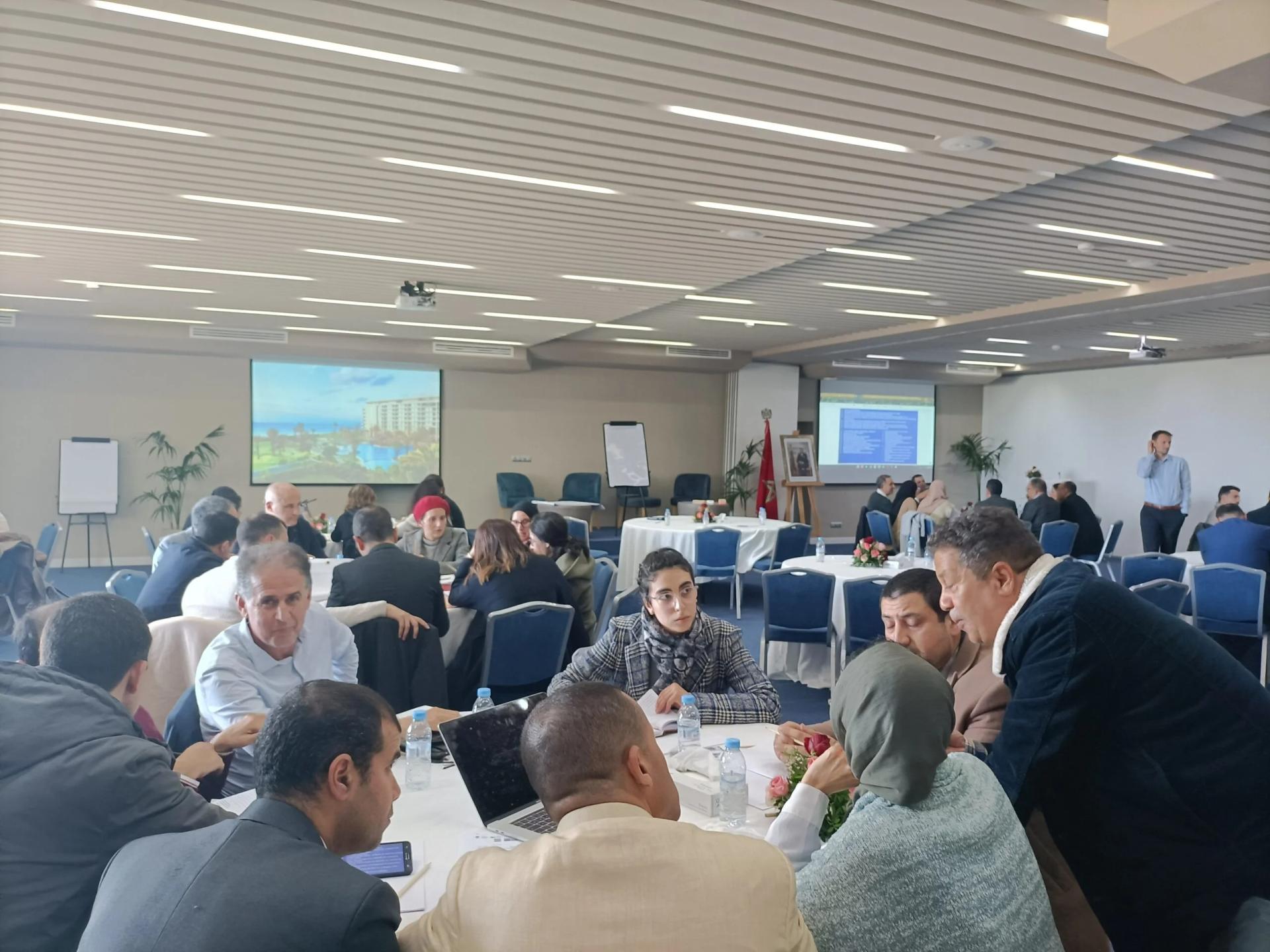
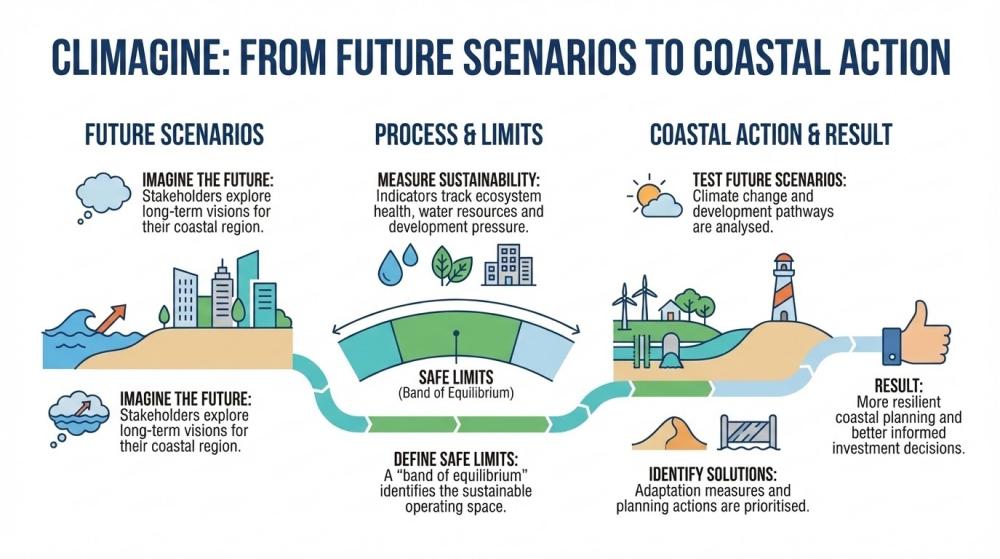
Climagine works through a structured four-step participatory workshops methodology that bring together scientists, national authorities, local planners and community representatives.
Participants first analyse the current state of their coastal environment and identify key sustainability indicators, ranging from ecosystem health and water resources to tourism development and land use.
Together they define what is known as a “band of equilibrium” , a safe operating space within which coastal development can remain environmentally and socially sustainable. Recently, through the MedProgramme's Special Climate Change Fund (SCCF) project, this process has expanded to explicitly include gender-sensitive climate risk assessments, utilizing specific metrics like the Gender Inequality Index (GII) to map vulnerabilities and ensure equitable adaptation strategies, recognizing that women often face greater climate vulnerability due to existing socio-economic inequalities.
Using this framework, stakeholders then explore future scenarios, examining how climate change, economic activity and policy choices could reshape their coastal region in the coming decades before formulating concrete recommendations for coastal plans.
“Climagine helped Moroccan, Montenegrin and Lebanese coastal management stakeholders learn how to transform complex climate information into concrete action plans that help build a more resilient future for their coastal communities,” notes Ante Ivcevic, Programme Officer from PAP/RAC, UNEP/MAP regional centre for coastal management. “ It allowed them to visualise how today’s decisions may shape tomorrow’s coastal landscapes.”
Supporting coastal planning across the Mediterranean
Within the UNEP/MAP-GEF MedProgramme, the methodology has been applied in several coastal regions to support integrated coastal planning and climate adaptation under the Integrated Coastal Zone Management (ICZM) Protocol.
In Montenegro, a series of four Climagine workshops contributed to the preparation of the Coastal Management Plan for Boka Kotorska Bay, where climate pressures and tourism development are increasing risks for coastal settlements and ecosystems.
In Morocco, the approach supported the development of the Regional Coastal Plan for the Tangier–Tetouan–Al Hoceima region, where coastal flooding, urban expansion and pressure on freshwater resources are growing concerns.
In Lebanon, the methodology helped inform the revision of the new National ICZM Strategy and contributed to the development of the Integrated Management Plan for the Damour coastal area, supported by six dedicated participatory workshops running until 2026.
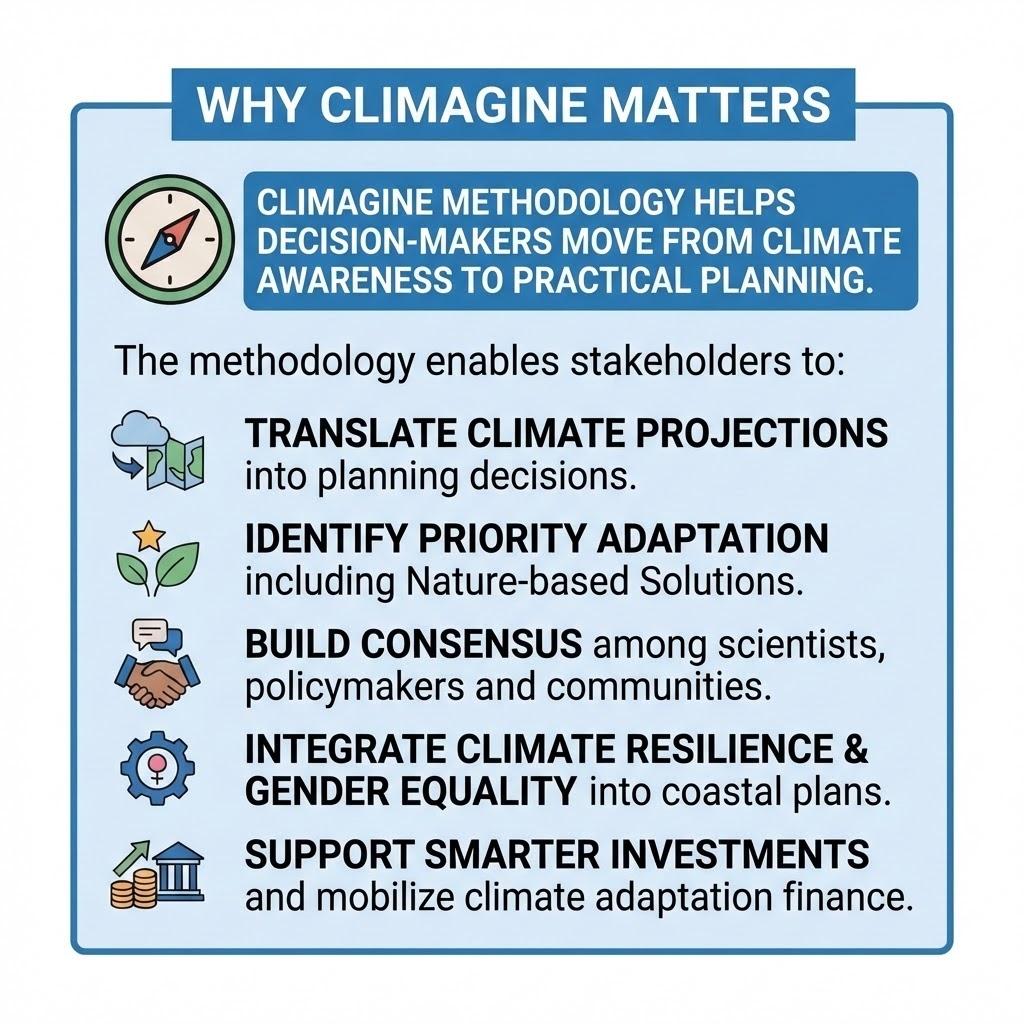
“Climagine provides a structured way to bring science, policy and local knowledge into the same conversation,” explains Alessandro Candeloro, MedProgramme International Waters expert. “It helps translate climate projections into concrete planning decisions.”
From discussion to action
Beyond dialogue, the process also helps stakeholders identify and prioritise practical adaptation measures.
By combining participatory foresight with economic analysis, decision-makers can evaluate which actions provide the greatest benefits for coastal protection, ecosystem health and community resilience.
These measures may include restoring natural coastal buffers, strengthening water management systems, adapting land-use planning or investing in climate-resilient infrastructure. Furthermore, the approach now actively promotes Nature-based Solutions (NbS) and helps countries bridge the funding gap by mobilizing climate adaptation finance through capacity building and private sector engagement.
A tool for the future of Mediterranean coasts
As climate pressures intensify across the Mediterranean, tools that help countries anticipate risks and plan strategically are becoming increasingly important.
Experience gained through the MedProgramme is now contributing to the development of a Climagine Guide for Practitioners, which will support the wider application of the methodology in coastal planning processes across the region, with a planned publication in 2026.
By combining science, participatory dialogue and forward-looking analysis, Climagine provides Mediterranean countries with a powerful tool to navigate an uncertain future, and to protect the coasts that millions of people depend on.