


Albania, Bosnia and Herzegovina and Montenegro turn environmental results into investment-ready action
What happens after environmental solutions are tested? How do good ideas move beyond pilot projects and become real investments that improve lives, protect nature and strengthen economies?
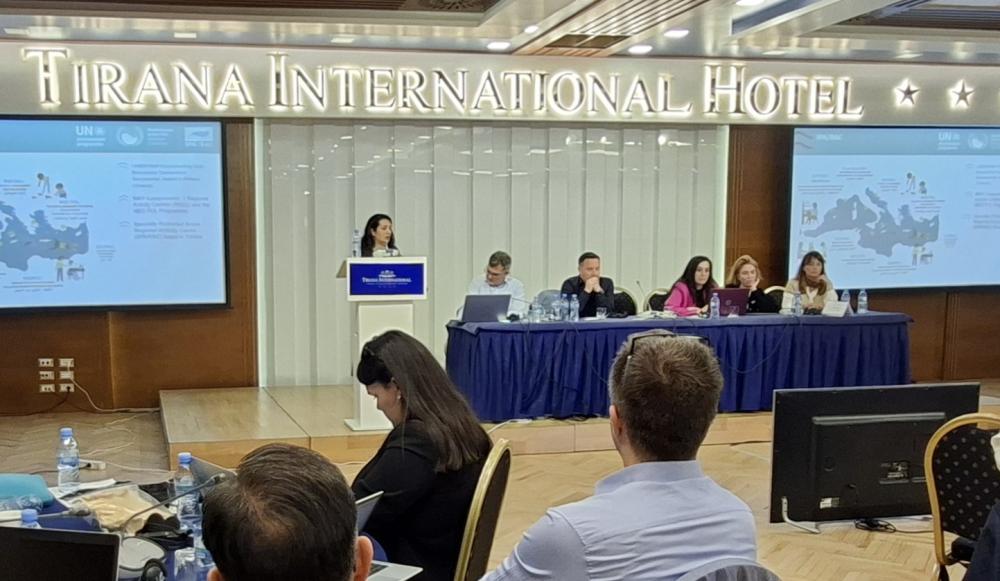
These were the central questions addressed in Tirana where Albania hosted regional partners, national institutions and international organisations to take a decisive next step: turning proven environmental solutions into actions that can be scaled, financed and implemented.
The two-day MedProgramme Sub-Regional Outreach Workshop for Albania, Bosnia and Herzegovina and Montenegro concluded with a clear shift in direction. Countries agreed that the priority is no longer identifying solutions, but making them ready for investment and large-scale impact.
At the center of this transition is a practical tool: the National Replication Atlas.
Designed as a bridge between technical work and financing, the Atlas helps countries identify which solutions are ready to scale, where they should be applied, who is responsible, and how they can be financed. Rather than another report, it is a decision-making instrument that translates years of analysis into concrete pipelines.
As Tatjana Hema, UNEP/MAP Coordinator, emphasised:
“The MedProgramme has demonstrated what works. The next step is to ensure that these results do not remain on paper, but are translated into concrete, scalable actions that countries can implement and finance.”
The workshop showcased a wide range of solutions already in place. These included coastal planning frameworks, groundwater management systems, nature-based solutions for climate resilience, pollution reduction measures and circular economy approaches.
In Montenegro, integrated coastal planning has identified investment priorities combining climate adaptation, ecosystem protection and economic development. In Albania, work on the Buna–Bojana system connects groundwater management, river basin planning and coastal resilience across borders. In Bosnia and Herzegovina, progress on monitoring systems and pollution management is strengthening the foundation for future investment.
Across these examples, one pattern stood out. The most effective solutions combine technical analysis, institutional coordination, stakeholder engagement and financial planning.
However, participants agreed that this is also where the main challenge lies.
Funding for environmental action exists. International financial institutions, climate funds and development programmes are active across the region. Yet many projects struggle to access this funding because they are not structured in a way that investors can support.
The gap is not technical knowledge. It is investment readiness.
This includes clearer project design, cost-benefit analysis, stronger data and alignment with financing mechanisms. It also requires better coordination across institutions and sectors, as well as engagement with the private sector.
Environmental protection today is not only about safeguarding ecosystems, but about building economically viable solutions that deliver long-term benefits.
Albania’s Minister of Tourism and Environment underlined this balance:
“Albania is working to strengthen environmental protection while ensuring sustainable economic development. Connecting national priorities with regional knowledge and international support is essential to achieve this balance.”
The workshop also reinforced the importance of looking beyond national borders. Many environmental challenges in the region are shared as rivers nor aquifers and coastal systems, do not recognise administrative boundaries. As a result, solutions must be developed and implemented collaboratively.
The source-to-sea approach, which connects inland water systems, groundwater, coastal zones and marine environments, emerged as a central organising principle. Systems such as the Buna–Bojana delta and the Drin Basin were identified as key opportunities for coordinated, cross-border action.
At the same time, participants stressed that successful scaling depends on people as much as on planning. Engaging local communities, strengthening institutional capacity, and integrating gender and youth perspectives are essential to ensure that solutions are effective and sustainable.
Another key takeaway was the role of knowledge itself. Valuable experience already exists across countries, but it is not always systematically captured or shared. Thus tools such as the MedProgramme Knowledge Management Platform and future story maps help turn technical results into accessible and replicable knowledge.
By the end of the meeting, the direction was clear. Countries will now compile priority interventions, identify gaps and hotspots, and structure these into Replication Atlases. These will serve as the foundation for engaging donors, attracting financing and shaping future environmental programmes, including under GEF-9.
The shift is significant. The MedProgramme has moved from demonstrating what works to enabling countries to scale what works. And in doing so, it is helping transform environmental action from isolated projects into coordinated, investment-ready solutions that can deliver lasting impact across the Mediterranean.