

Mediterranean Forum turns knowledge into behavioural change
A Shift from Awareness to Action
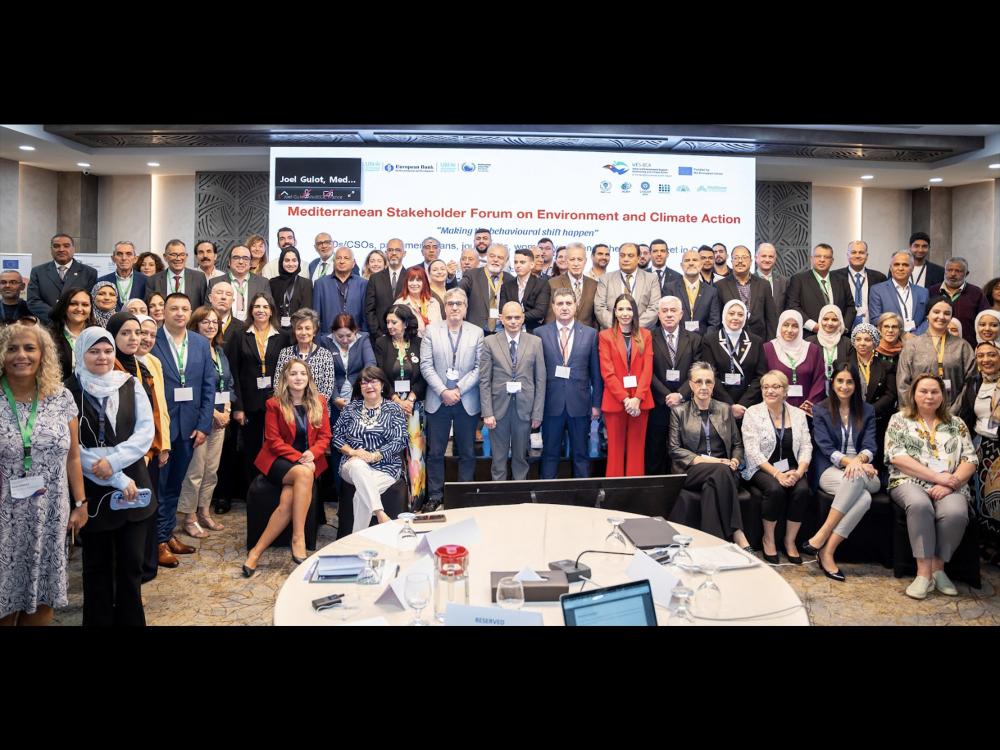
Everyone in the Mediterranean knows the climate is changing. The question is no longer whether people are aware, but what they do next. This was the starting point in Cairo, where more than 170 stakeholders from across 21 countries gathered for the Mediterranean Stakeholder Forum on Environment and Climate Action in October 2025. For three days, representatives of civil society, governments, science, media, youth and the private sector confronted a shared reality: awareness is rising, but action is not keeping pace. What emerged was not another call for more information, but a clear conclusion: behavioural change is now the central challenge. As Tatjana Hema, UNEP/MAP Coordinator, set the tone at the opening, “Behavioural change is at the heart of this challenge.” From that moment, the Forum shifted the conversation. Climate action was no longer framed only as policy or investment, but as something shaped daily by how people communicate, decide and act.
Where Change Really Happens
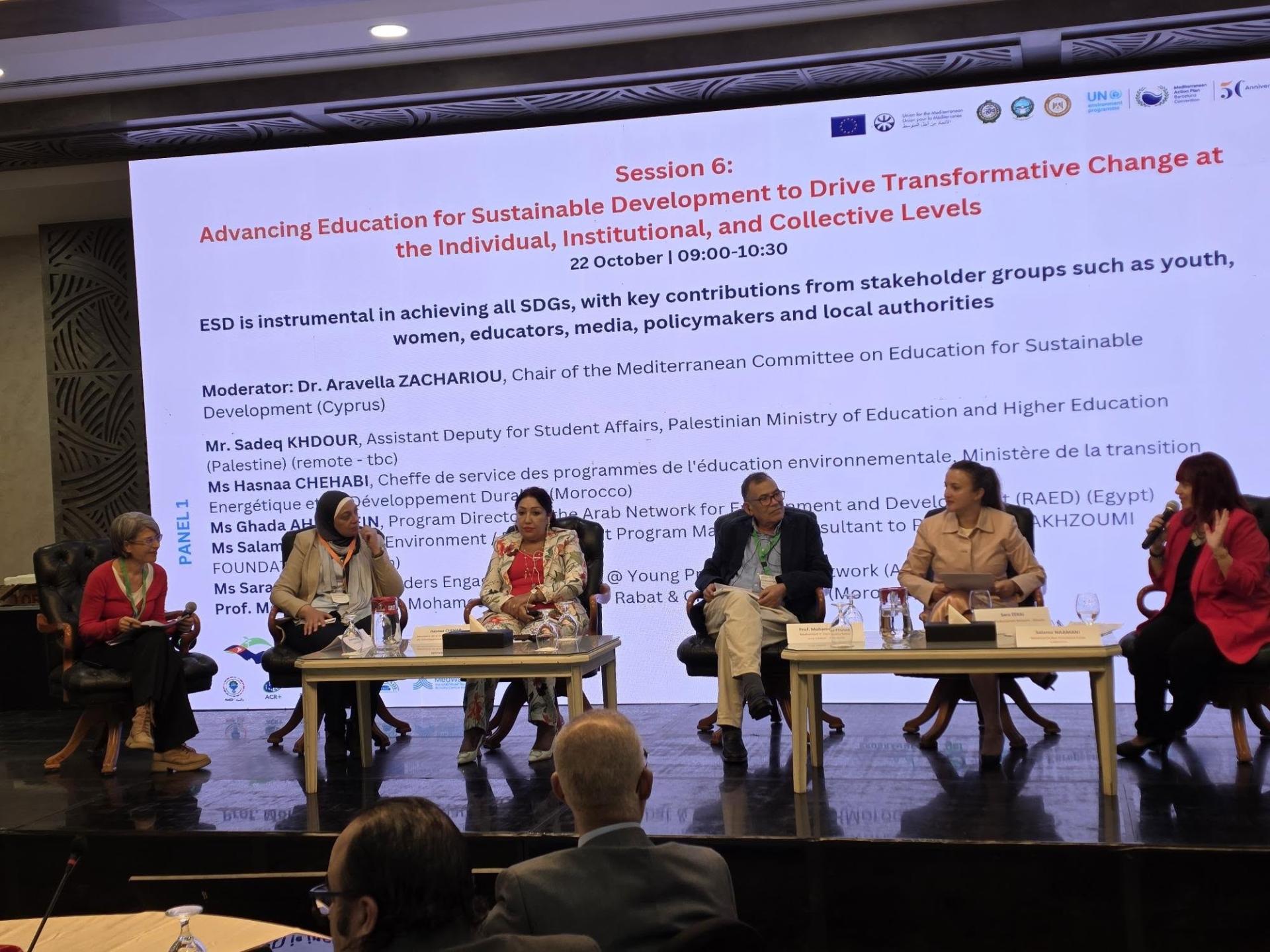
Across discussions, one insight became unavoidable: people do not change behaviour because of reports or strategies. They change when knowledge becomes personal, practical and trusted. Participants pointed to a persistent gap. Scientific evidence is strong, solutions exist, and policies are in place. Yet across the region, environmental action is still seen as secondary to economic concerns, and many solutions fail to reach communities in ways that influence everyday choices. This is where communication, education and participation moved to the centre of the discussion. Journalists spoke about the need to replace abstract climate narratives with stories rooted in daily life. Educators highlighted the importance of embedding sustainability not as a subject, but as a lived practice. Youth organisations demonstrated how peer-to-peer communication can shift behaviours faster than institutional messaging. The conclusion was clear: knowledge must be translated, not just produced.
The Role of MedProgramme: Knowledge as Infrastructure
Within this shift, the MedProgramme emerged as a practical example of how knowledge can drive change. Through its Knowledge Management Platform and communication work under Child Project 4.1, the Programme connects science, policy and real-world experience across the Mediterranean, turning technical results into accessible and usable knowledge. At the Forum, this role became even more defined. Participants called for stronger regional systems to document and share what works, from case studies and pilot projects to policy tools and community practices. The MedProgramme Knowledge Management Platform was identified as a key foundation for this effort, helping countries and organisations learn from each other and replicate successful approaches. In this context, knowledge is no longer an output, but infrastructure for change.
Integration Works When People Shape It
Another conclusion emerged just as strongly: integrated solutions only succeed when people are part of their design. Civil society organisations, local communities, youth and women were recognised as drivers of transformation, not just participants. Their role is not to support policies, but to shape them. Examples from across the region showed that when communities are involved from the beginning, solutions become more effective, more accepted and more sustainable. This shift was captured in a statement that resonated throughout the Forum: “Integration only works when communities help decide how it works.”
From Pilot Solutions to Regional Impact
By the final day, the Forum had moved from diagnosis to direction. Participants agreed that the region does not lack solutions. From integrated water management to biodiversity protection and circular economy initiatives, tested approaches already exist. The real challenge is scaling them. This requires more than technical replication. It demands better governance, stronger partnerships, accessible knowledge and investment-ready design. Approaches such as the WEFE Nexus and the source-to-sea framework were highlighted as tools that connect sectors and make solutions more coherent and scalable. At the same time, participants stressed that scaling depends on trust, communication and ownership as much as on funding.
A Shared Responsibility
The conclusions of the Forum, later carried to the Barcelona Convention COP24, reflect a growing urgency across the region. Participants called for faster implementation, stronger cooperation and more inclusive governance. They stressed the need to empower civil society, engage youth, strengthen education and invest in communication as a driver of behavioural change. Behind these recommendations lies a deeper recognition: environmental action in the Mediterranean is no longer only about protecting ecosystems, but about shaping how societies function and how people relate to their environment. As Tatjana Hema concluded, “Protecting the Mediterranean is not only an environmental imperative; it is a shared responsibility and a moral necessity.”
From Awareness to Transformation
The Cairo Forum did not end with new commitments alone. It clarified what comes next. Behavioural change must be embedded in policies, education, communication and investment. Knowledge must be shared, understood and applied. And solutions must be co-created, not imposed. By connecting science, policy and people, the MedProgramme and its partners are helping move the region in that direction. The lesson is simple but decisive. The Mediterranean does not need more awareness. It needs action shaped by understanding.